Shadow Warrior DC: the console version it never had
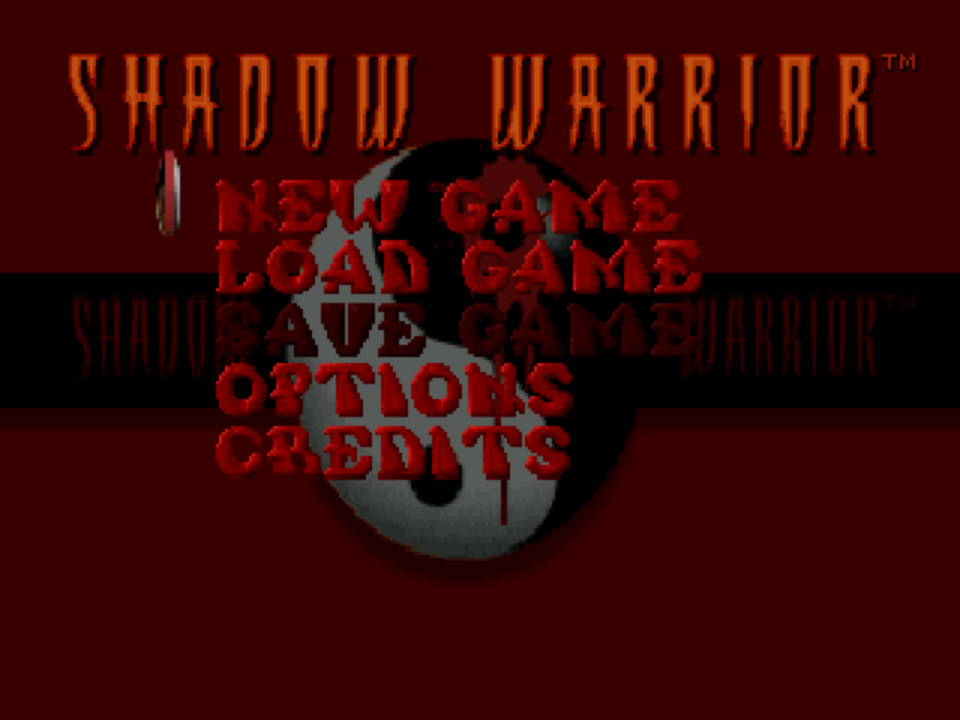
Shadow Warrior came out in 1997, made by 3D Realms, the same people behind Duke Nukem 3D, and running on the same engine, Ken Silverman's Build. Unlike Duke, it never made it to the consoles of its day: there was no version for the PlayStation or the Saturn, nor later for the Dreamcast or the PS2. This is a fan port to put that right, at least on the Dreamcast.
The starting point is the original code, released by 3D Realms under the GPL in 2005, or more precisely the portable version of it published as JFShadowWarrior (JFSW), which already runs on modern systems. On top of that goes a Dreamcast layer built on KallistiOS: graphics, sound effects through the console's AICA sound chip, music as CD audio tracks, and support for the controller, keyboard and VMU. Build draws everything in software, so it's the Dreamcast's SH-4 that renders every frame, and the PowerVR only has to put it on screen. The several screen resolutions the original code offered have been removed, leaving the game at a fixed 320×240, and so have some of the more exotic features the Dreamcast port would never use anyway, such as voxels.
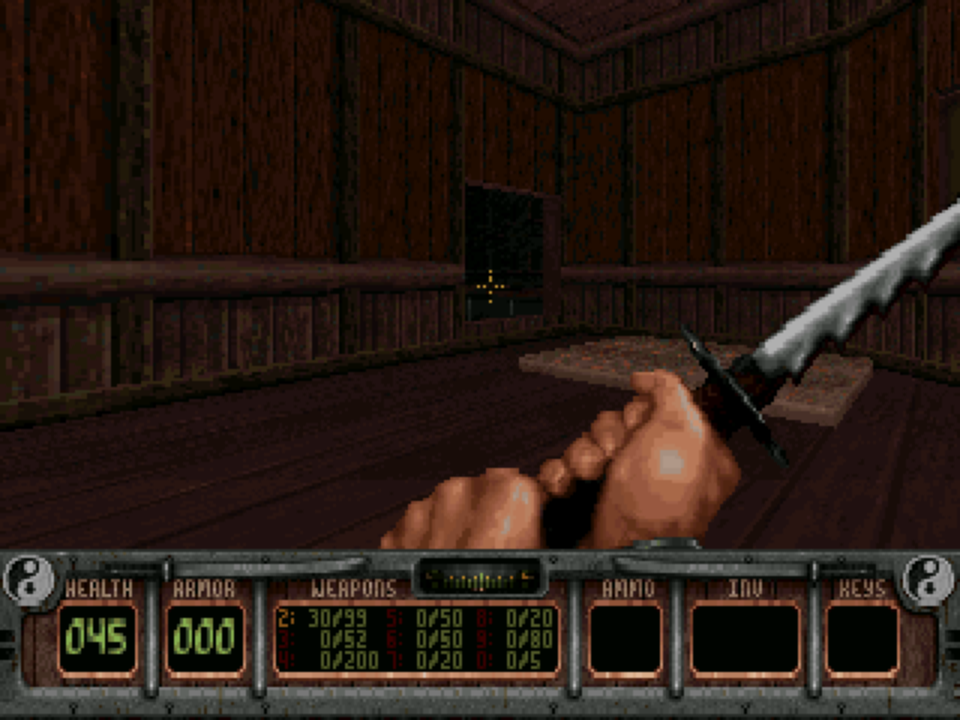
The first playable build came together within a few hours of starting. A few days in, settings and saved games live on the VMU, compressed so a save fits in its few blocks; the VMU screen shows the title and the player's stats; the Jump Pack rumbles on hits, heavy weapons and earthquakes; and an Options menu lets you switch on the PC cheat codes from the pad. Real hardware is already proving stricter than the emulators, with crashes from memory reads the SH-4 won't tolerate.